
Lithium Ion Battery Safety
Lithium-ion batteries power many of the devices we use every day, including cell phones, tablets, power tools, e-bikes, e-scooters, lawn equipment, and electric vehicles. While these batteries are generally safe, improper charging, physical damage, or the use of incompatible charging equipment can increase the risk of fire.
By following a few simple safety practices, you can help protect your home and family.

Charge Batteries Safely
Always follow the manufacturer's recommendations when charging lithium-ion batteries.
- Use only the charger designed for your device or one approved by the manufacturer.
- Avoid counterfeit or off-brand replacement batteries and chargers.
- Never use a charger or battery that is damaged or has exposed wiring.
- Plug chargers directly into a wall outlet whenever possible.
- Avoid using extension cords, power strips, or multi-plug adapters unless they are specifically rated for the charging load.
- Do not charge batteries on beds, couches, or other soft surfaces that can trap heat.
- Charge batteries in a cool, dry, well-ventilated location.
Prevent Overheating
Heat is one of the leading causes of lithium-ion battery failures.
- Keep batteries away from direct sunlight and high temperatures.
- Do not leave batteries or devices in hot vehicles.
- Unplug chargers when charging is complete if the manufacturer recommends doing so.
- Allow batteries to cool before charging if they have become hot during use.
Inspect Batteries Regularly
Stop using a battery immediately if you notice:
- Swelling or bulging
- Cracks or punctures
- Leaking fluids
- A strong chemical odor
- Excessive heat
- Smoke, sparks, or popping sounds
- Changes in color or unusual discoloration
Never attempt to repair a damaged lithium-ion battery.
Store Batteries Properly
Proper storage helps extend battery life and reduce fire risks.
- Store batteries in a cool, dry location.
- Keep batteries away from combustible materials such as paper, cardboard, clothing, and gasoline.
- Store spare batteries in their original packaging or a protective battery case.
- Prevent loose batteries from coming into contact with metal objects, such as keys, coins, or tools, which can cause a short circuit.
- Follow the manufacturer's recommendations for long-term storage.
E-Bike and E-Scooter Safety
Lithium-ion battery fires involving e-bikes and e-scooters have increased nationwide.
- Purchase products that have been tested and certified by a nationally recognized testing laboratory.
- Never modify or rebuild battery packs.
- Do not use batteries or chargers that are not designed for your device.
- Avoid charging e-bikes or e-scooters near exits or in areas that could block your escape if a fire occurs.
- Do not leave batteries charging unattended or overnight unless the manufacturer specifically states it is safe to do so.
Dispose of Batteries Safely
Lithium-ion batteries should never be thrown in household trash or recycling bins.
- Recycle batteries through an approved battery recycling program or household hazardous waste facility.
- Tape the battery terminals before transporting loose batteries to help prevent short circuits.
- If a battery is damaged, follow your local hazardous waste disposal guidelines.
If a Battery Begins to Fail
A failing lithium-ion battery may provide warning signs before a fire occurs.
If you notice smoke, hissing, popping sounds, excessive heat, or a strong chemical odor:
- Move away from the battery immediately.
- If it is safe to do so, unplug the charger.
- Evacuate the area if the battery begins smoking or burning.
- Close doors behind you as you leave to help slow the spread of smoke and fire.
- Call 911 immediately.
- Do not handle a battery that is smoking, burning, or overheating.
If a Fire Starts
Lithium-ion battery fires can spread rapidly and may reignite after the flames appear to be extinguished.
- Get everyone out of the building immediately.
- Close doors as you leave if possible.
- Call 911 from a safe location.
- Never re-enter a building for any reason until it has been determined that it is safe to do so.
- Allow firefighters to determine when it is safe to return.
Remember
Lithium-ion batteries are part of everyday life, but safe charging, proper storage and regular inspection are essential. Using manufacturer-approved batteries and chargers, avoiding damaged equipment and recognizing the warning signs of battery failure can help prevent fires before they start. If a battery appears damaged or begins to overheat, stop using it immediately and dispose of it properly.
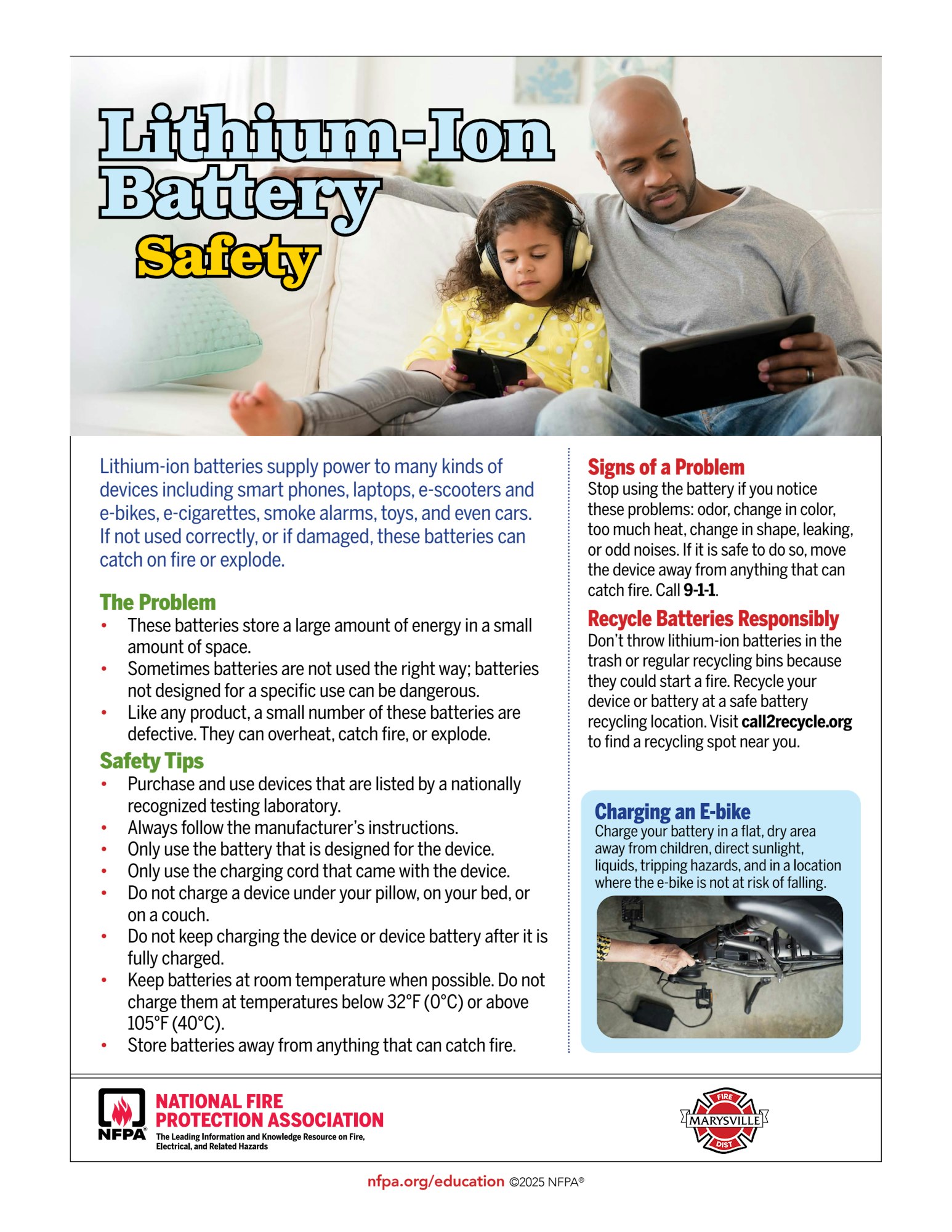
For more information about lithium-ion battery safety, please go here.
